


Table of Contents
Hydroponic farming in Kenya can deliver high yields and strong profits with minimal land and water. To get started, pick a system (like NFT or drip), install a reservoir and pump, buy quality seedlings and nutrients, and grow leafy greens or strawberries in a controlled space. This sustainable method uses up to 90% less water than traditional farming and is well-suited for urban environments across Kenya.
What Is Hydroponic Farming?
It’s a method of growing plants without soil. Instead, roots are suspended in nutrient-rich water solutions or inert mediums like coconut coir or perlite. It’s highly efficient, allowing for faster plant growth, minimal water usage, and high yields in a small area.
Some people ask: what is hydroponics? The term broadly refers to any soil-less growing technique using water and nutrients to sustain plant life. It’s part of a wider field called hydroponic agriculture or hydroponics agriculture, which is revolutionizing modern food production globally.
🔧 Types of Hydroponic Systems Used in Kenya
Kenyan farmers commonly use:
Wick Systems – passive, low-cost designs for small-scale or educational setups.
NFT (Nutrient Film Technique) – thin nutrient solution flows over plant roots; great for leafy greens.
Drip Systems – targeted nutrient delivery to each plant; ideal for fruiting crops.
Deep Water Culture (DWC) – roots suspended in oxygenated water. Simple and beginner-friendly.
Ebb and Flow (Flood & Drain) – periodically floods and drains trays, naturally oxygenates roots without air pumps.
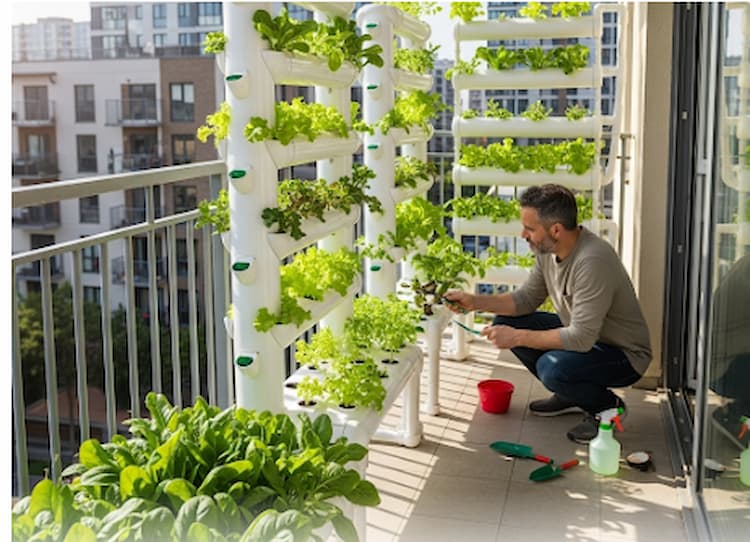
🌍 Why It’s Taking Off in Kenya
Hydroponic farming in Kenya is expanding rapidly because:
- Uses 80–90% less water than traditional agriculture.
- Ideal for urban areas with limited space (including slums like Kibera and Mathare).
- Enables higher yields in smaller areas – crops grow faster without soil-borne pests.
- Supported by community and NGO projects, like Aqua-for-All using simplified units for low-income urban groups.
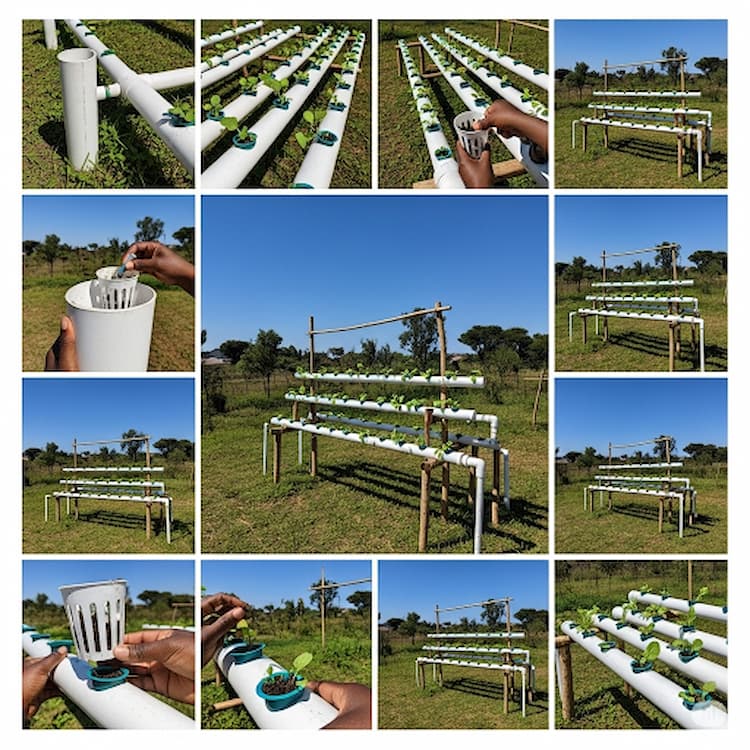
Cost of Setting Up a Hydroponics Farm
The initial investment depends on the scale and type of system. Here’s a basic breakdown:
| Type | Description | Estimated Cost (KES) |
|---|---|---|
| DIY Balcony Kit | For home use, 20–30 plants | 15,000–30,000 |
| Mid-Scale Greenhouse | 200–500 plants | 80,000–300,000 |
| Commercial Setup | Full greenhouse system | 500,000+ |
Additional costs:
Seedlings: Ksh 5–15 each Running costs include electricity, nutrients, pH meters, and seedlings. For reliable seed varieties suited for hydroponic systems, here’s a guide on where to buy hydroponic-friendly seedlings in Nairobi.
Water-soluble nutrients: Ksh 2,500 per 5 L
Growing media (coco peat, rock wool): Ksh 1,000–3,000
pH/EC meter: ~Ksh 4,000–5,000
Where to Buy Hydroponics Systems in Kenya
Here are top and trusted suppliers offering hydroponics solutions:
1. Hydroponics Africa Limited – Nairobi
Hydroponics Africa is a leading pioneer in hydroponic farming in Kenya, offering turnkey solutions for urban, peri-urban, and rural growers. They specialize in setting up customized hydroponics systems, supply nutrient solutions, and provide training for both beginners and large-scale farmers. Their systems are water-efficient, soil-less, and tailored to crops like lettuce, tomatoes, strawberries, herbs, and more. Located in Nairobi, they also support aquaponics farming in Kenya and have served clients across East Africa.
- 📞 Phone:+254722956647/+254703286763
- 🌐 Website: https://www.hydroponicsafrica.org/
2. Synnefa – Smart Greenhouse Solutions in Nairobi
Synnefa is one of the leading players promoting hydroponic farming Kenya solutions, offering IoT-powered greenhouses, hydroponic systems, and the FarmCloud™ platform for remote farm monitoring. Their tech helps farmers cut fertilizer use by up to 30% and increase yields by 50%.
They offer rent-to-own options, training, and support for smallholder and commercial farmers across Kenya.
📍 Bishop Magua Centre, Ngong Road, Nairobi
📞 +254 20 389 2455 | synnefa.io You can also try their chat, very quick to reply and friendly.
3.Vertical Gardens Kenya – Nairobi & Kiambu (Waiyaki Way, Kikuyu)
Vertical Gardens Kenya specializes in vertical hydroponic systems that maximize small and urban spaces—ideal for balconies, rooftops, schools, and compact compounds. Their media-based and tower gardens deliver up to 3× more yield per square meter while recycling up to 90% of irrigation water.
They offer full turnkey kits (vertical towers, growing media, seedling support, automated or manual drip irrigation), along with setup and agronomy training.
📍 Location: Opposite the Underpass in Kinoo, along Waiyaki Way, Kikuyu, Nairobi.
📞 Contact: +254 729 476 598 / +254 796 858 867
📧 Email: verticalgardenskenya@gmail.com
4. Greenlife Veggies – Nairobi
Greenlife Veggies is a hydroponics-focused enterprise based in Muthiga, Nairobi County, offering equipment, training, and consultancy in soilless farming. They specialize in growing media (pumice, coco-peat), net pots, gutters, and drip lines for crops like lettuce, spinach, kale, and herbs. They also run tours and training sessions for interested farmers at a small fee.
- 📍 Location: Muthiga, Waiyaki Way, Nairobi.
- 📞 Contact: 0700 210 080
- ✅ Offers hands-on training, system components, and advice for urban growers and school projects.
IMPORTANT: Always confirm the system type, training support, and warranty before purchasing an equipment or service for hydroponic farming in Kenya.
👉Starting your own system? You’ll need the right tools like affordable seedling trays in Kenya to kick off successfully.
Common Crops Grown in Hydroponics
You can grow a wide variety of crops, including:
- Lettuce
- Spinach
- Strawberries
- Tomatoes
- Bell peppers
- Kale (Sukuma wiki)
- Herbs (basil, mint, coriander)
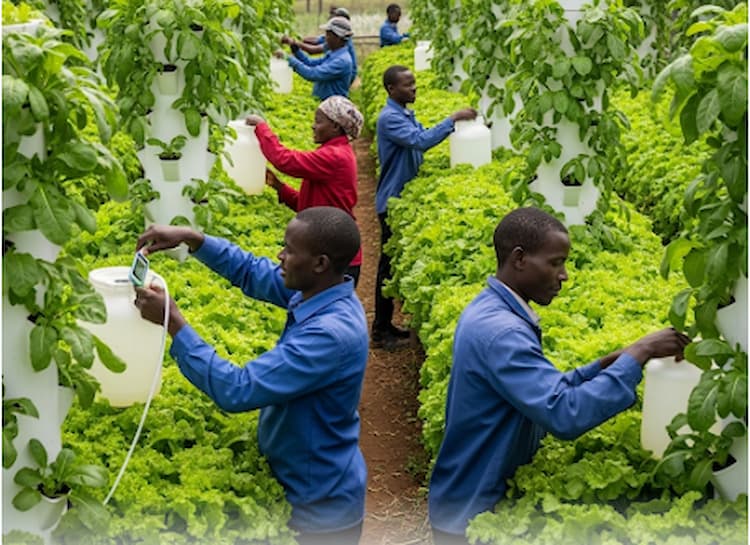
These crops are ideal for hydroponic farming in Kenya because they have fast cycles and high market demand.
Related: 👉 JKUAT Seedlings Price List guide.
Aquaponics Farming in Kenya: A Sister Solution
Aquaponics farming in Kenya combines fish farming with hydroponics. Fish waste provides nutrients for the plants, while the plants filter the water for the fish. It’s a great circular system that further reduces input costs and waste.
While it requires more technical knowledge, aquaponics is catching on in parts of Kenya where water is limited and farmers want integrated farming systems.
FAQs on Hydroponic Farming Kenya
What is hydroponic farming?
Hydroponic farming is a method of growing crops without soil, using water-based nutrient solutions. Instead of planting in soil, plants grow in inert media like coco peat, rock wool, or perlite. It allows for faster growth, higher yields, and efficient resource use.
Is hydroponic farming Kenya viable for beginners?
Yes, many suppliers now offer starter kits and training for Kenyans looking to venture into hydroponic farming Kenya with minimal risk.
How does hydroponic farming in Kenya work?
In Kenya, hydroponic farming uses locally adapted systems such as NFT (Nutrient Film Technique), vertical towers, and A-frame setups. These systems are ideal for urban and peri-urban farming, especially in places with limited land like Nairobi and Kiambu.
Is hydroponic farming profitable in Kenya?
Yes. Farmers practicing hydroponics farming in Kenya report higher yields per square meter and lower water usage. Profits depend on crop choice, market access, and system scale, but crops like lettuce, herbs, strawberries, and tomatoes are especially lucrative.
What crops can I grow using hydroponics in Kenya?
You can grow lettuce, spinach, sukuma wiki, strawberries, basil, mint, tomatoes, and capsicum. Leafy greens are particularly popular in hydroponic farms in Kenya due to short maturity periods and high demand in urban markets.
How much does it cost to start hydroponic farming in Kenya?
Starter kits can cost from Ksh 25,000 for small systems to over Ksh 300,000 for commercial-scale units. Costs vary depending on crop type, system size, and automation level.
Where can I learn more or buy a hydroponics system in Kenya?
There are several reliable suppliers and trainers including Hydroponics Africa, Synnefa, and Vertical Gardens. Many offer training, setup, and support in places like Nairobi and hydroponic farming Kiambu.
What is the difference between hydroponics and aquaponics farming in Kenya?
Hydroponics uses only nutrient-enriched water to grow plants. Aquaponics farming in Kenya combines hydroponics with fish farming, where fish waste fertilizes the plants, and the plants purify the water for fish reuse.
Do I need a greenhouse for hydroponic farming in Kenya?
Not necessarily. While a greenhouse helps control temperature and pests, many Kenyan farmers use open-field or shaded setups for crops like lettuce and herbs. However, greenhouses boost consistency and protect crops from harsh weather.
Final Thoughts: Is Hydroponics Worth It?
Yes — hydroponics farming in Kenya is worth the investment if you’re looking for sustainable food production, whether for home use or agribusiness. While initial costs may seem high, the long-term returns in yield, water savings, and market access are significant.
Whether you’re a student, stay-at-home parent, retiree, or entrepreneur, hydroponics gives you the power to grow food even without land. And with Kenya’s rising urban population and climate unpredictability, hydroponics may be the future of food security.
If you’re ready to explore this path, consider starting small with a basic kit or getting trained at a local farm. The demand for clean, fresh, pesticide-free vegetables is only growing — and hydroponics agriculture gives you a competitive edge.
If you’re considering venturing beyond hydroponics, check out these profitable agribusiness ideas in Kenya to explore other high-potential options.


Leave a Reply